
Best Wood for a Subwoofer Box: MDF vs Baltic Birch, Pine, and More
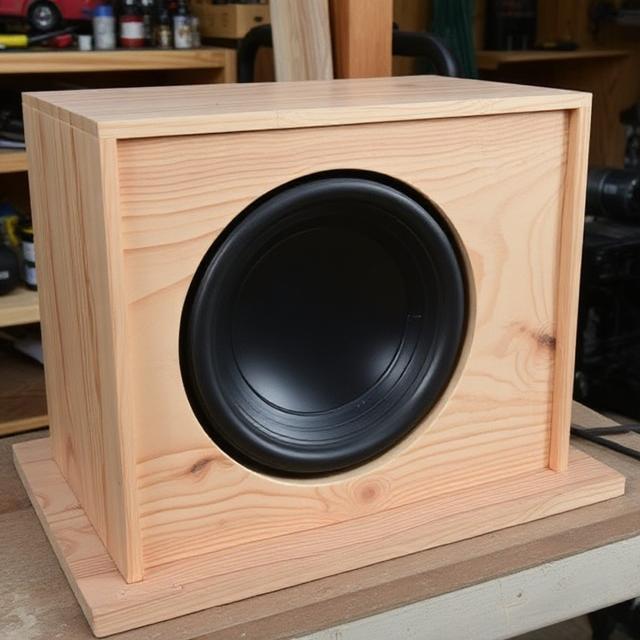
A subwoofer box isn’t just a container; it’s your sub’s home. If that “home” flexes, leaks air, or rattles like a loose license plate, your bass pays the price. The lows can lose punch, notes can blur together, and that satisfying pressure you wanted turns into noise.
That’s why the best wood for a subwoofer box isn’t only about what’s trendy. It’s about what stays stiff under pressure, holds screws without drama, and keeps the air inside the box doing what it’s supposed to do.
This guide breaks down the most common materials people use for car audio enclosures. You’ll see how MDF and Baltic birch compare, where pine makes sense, and when fiberglass beats wood entirely. Along the way, you’ll also get the real “make or break” details, thickness, sealing, bracing, and layout, so your box sounds strong even before you turn the gain up.
What makes the best subwoofer box sound good (it’s not just the wood)
A car subwoofer is basically an air pump. It shoves and pulls air with every beat. The box’s job is to control that air so the cone works against a stable load, not a moving target.
When the enclosure walls flex, some of the sub’s energy goes into bending the box instead of pushing air into the cabin. The bass gets softer and less direct. You might also hear buzzing or a hollow “cardboard” sound on certain notes. That’s the box talking when it should stay quiet.
Air leaks cause a different kind of damage. A sealed box with leaks no longer acts sealed, and a ported box with leaks can lose output and sound uneven. Even small gaps matter, including around screw holes, wire terminals, and seams. Leaks also invite annoying noises when pressure builds.
Density helps because heavy, uniform panels tend to vibrate less. That’s why thick, dense boards are popular for subwoofer enclosures. Still, the choice of wood only gets you so far. Build quality decides whether that material turns into a clean bass or a rolling rattle trap.
Rigidity, airtight seams, and thickness are the big three
Rigidity means the box walls don’t bend when the sub hits. If you push on a big panel and it feels springy, imagine what it does at volume. Flex often shows up as a “buzzy” tone, or bass that feels loud but not solid.
Airtight seams mean no leaks anywhere, not at the corners, not around the terminal cup, not around mounting screws. A leak can make bass sound weak, and it can also create a hiss or flutter on heavy notes. If you’ve ever heard a box that sounds like it’s wheezing, that’s usually air getting out where it shouldn’t.
Thickness is the simple part people skip. For most car sub boxes, 3/4-inch (19 mm) material is the common sweet spot because it resists flex and gives screws more to bite into. 1/2-inch (12.5 mm) can work for smaller subs (around 8-inch and under), but only if the design is tight, well-braced, and not asking for big output in a large panel area.
Bracing and separate chambers can matter as much as the board
Big, flat panels act like drum heads. Bracing breaks that up and makes the enclosure behave like a solid block instead of a loose cabinet.
Corner bracing helps at the joints, where panels meet, and pressure stacks up. Triangle braces in the corners add strength without stealing a ton of volume. Cross bracing helps even more on larger walls, especially in wide trunk boxes where the top, bottom, or back panel has a lot of open space. A simple trick many builders miss is brace placement: a cross brace set slightly off-center can be stiffer than one perfectly centered, because it avoids letting the panel flex in a single, predictable pattern.
If you run multiple subs, separate chambers and dividers are worth serious thought. A divider adds strength and also stops one driver from messing with the other. Small differences between subs, even identical models, can lead to uneven motion when they share one big airspace. Separate chambers keep things controlled and predictable.
MDF, Baltic birch, pine, and fiberglass: which one is the best wood for a subwoofer box?
Cars are rough on enclosures. Heat, cold, humidity, vibration, and the occasional grocery bag slam all add up. So the “best” material depends on what you drive, where you live, and how hard you play your system.
Here’s the clean way to think about it: MDF is the baseline because it’s consistent and easy to work with. Baltic birch is the upgrade when you want strength and durability without the weight. Pine is a looks-first option that demands care. Fiberglass isn’t wood, but it can solve fitment problems wood can’t touch.
A quick snapshot helps:
| Material | Best for | Main upside | Main downside |
|---|---|---|---|
| MDF | Most DIY builds | Smooth, low-rattle sound | Heavy, hates moisture if unsealed |
| Baltic birch plywood | Strong daily builds, lighter installs | Tough, great screw hold | Costs more, quality varies |
| Pine (solid wood) | Visible show boxes | Natural look, stainable | Warps, knots split, picky boards |
| Fiberglass (not wood) | Tight spaces, molded installs | Custom shapes, light | Harder to build cleanly |
MDF is the go-to for smooth bass and easy DIY builds
MDF is popular for a reason. It’s dense and uniform, which helps keep the box from singing along with the sub. It cuts cleanly, it wraps well, and it’s usually affordable and easy to find. For most trunk builds, it’s the simplest path to a box that sounds tight and controlled.
Another perk is consistency. Natural wood can vary from board to board, but MDF is predictable. That predictability matters when you’re trying to hit a target volume and want the box to behave the way your sub’s specs say it should.
The drawbacks are real, though. MDF is heavy, so big enclosures can be a pain to move. More importantly, MDF can swell if it gets wet. If you live in a humid area, deal with wet gear in the trunk, or drive a work truck that sees mud and moisture, you should treat MDF like it’s allergic to water.
The fix is simple: seal it. Paint, resin, bed liner, vinyl wrap, carpet, any of these can work, as long as the edges and cut surfaces get covered too.
Baltic birch plywood is stronger, lighter, and handles vehicle life better
When people talk about “plywood” for sub boxes, the good stuff is void-free Baltic birch, not bargain sheets with soft cores and gaps inside. Quality birch has tight layers, strong glue, and better structure than most hardware store plywood.
In a vehicle, that strength shows up in practical ways. Baltic birch tends to hold screws better, resists impacts, and tolerates vibration without loosening as easily. It’s also lighter than MDF, which matters when you’re building a big ported enclosure or mounting something in a spot where weight causes stress over time.
It also handles temperature swings and humidity better than MDF in many real-world setups. You still need to seal edges, but it’s generally less likely to turn into a swollen mess if life happens.
The tradeoff is price and quality control. Baltic birch costs more, and “birch-faced” plywood often disappoints because it looks nice on the outside while hiding voids inside. If you pick plywood, buy from a supplier that knows what they’re selling.
Pine and other solid woods look amazing, but they’re pickier
A pine box with a clean stain can look like custom furniture in your trunk. If your system is part sound system, part showpiece, solid wood has a vibe MDF can’t fake.
But pine is also the material that punishes shortcuts. Knots can loosen and buzz. Boards can split near screws if you don’t pre-drill. Heat and humidity can warp panels over time, and warping leads to gaps, leaks, and ugly joints.
If you want to go this route, stack the odds in your favor. Choose straight, clear boards with minimal knots, pre-drill your holes, and seal the wood well. Pine can work, but it’s not the easy road to consistent bass.
Fiberglass isn’t wood, but it solves tight spaces and custom shapes
Fiberglass shows up in high-end installs for one big reason: it fits where wood can’t. Odd trunk corners, side panels, stealth builds, and molded wells are fiberglass territory. It’s also light and strong when built correctly.
The catch is that fiberglass is less forgiving. The process takes time, and bad technique can lead to thin spots, weak areas, or panels that ring. Also, fiberglass isn’t ideal for big flat walls, so most fiberglass enclosures focus on curved shapes.
A common approach is a fiberglass shell with a wood baffle. The baffle gives you a rigid, reliable mounting surface for the sub, while fiberglass handles the shape.
Pick the right material for your build, your climate, and your goals
Choosing the best wood for a subwoofer box gets a lot easier when you stop thinking like a shopper and start thinking like an installer. Where will the box live, what will it go through, and what kind of bass do you want?
If you’re building a normal daily driver system and the box will sit in the trunk year-round, MDF makes sense because it’s consistent and quiet. If you want something that survives hard use, gets moved often, or lives in a truck that sees moisture and temperature swings, Baltic birch starts to look like money well spent. If the box will be seen and you want a natural finish, pine can be a cool choice, but you’ll need patience and careful board selection. If the only good spot for the sub is an odd corner, fiberglass can turn wasted space into bass.
Also, match the material to the enclosure type. Ported boxes can build serious internal pressure, and that pressure hunts for weak seams and flexible panels. A ported build doesn’t just ask for “good wood,” it demands better bracing, better sealing, and careful cuts.
Simple recommendations most people can follow without regret
For most car audio fans, these picks cover almost every real-life situation.
If you want sound quality on a budget, go with 3/4-inch MDF. Build it clean, glue every joint, and seal the surfaces so moisture doesn’t creep in. MDF’s density helps keep the bass smooth, and it’s easy to finish with carpet or vinyl.
If you’re building a high-output ported box, stick with 3/4-inch minimum and treat bracing like part of the design, not an add-on. Baltic birch can be a strong move here because it handles abuse well and keeps weight down, especially if the enclosure is large. Remember, ported designs can push higher pressure inside the box than many people expect, so weak joints and thin panels show up fast.
If you deal with humid weather, wet gear, or work-truck life, pick Baltic birch, or even marine-grade plywood if you can source it. Whatever you choose, seal the edges, because edges soak up moisture first.
If you’re building a custom show install with odd shapes, fiberglass can be the cleanest solution. Pair it with a solid wood baffle so the sub has a firm foundation.
Build details that make any wood work better
Good materials can’t save a sloppy build. The small details decide whether your box hits hard or sounds tired.
Start with internal volume, not outside size. You have to subtract wall thickness to get internal dimensions, then account for displacement from the sub itself. If it’s a ported box, the port takes up space too, and that volume counts.
Build every joint like it’s trying to leak, because it is. Use wood glue along the entire seam, not just dots. Add fasteners on a consistent spacing pattern (many builders aim for a few inches between screws or staples). Countersinking screws helps the finish look clean and reduces the chance of bumps under carpet or paint.
Seal gaps where air can sneak out, including around wire terminals and mounting holes. A small bead of silicone in the right places can stop headaches later.
Ported boxes also need breathing room. Don’t mount the port opening tightly against a solid surface. Leave clearance so air can move freely, or output can drop, and noises can show up.
Box shape is flexible, but volume isn’t. You can make a box taller and thinner to fit a trunk, or shorter and deeper, as long as you keep the internal airspace and port dimensions where they belong.
Wrapping up… What is the best wood for a subwoofer box?
What is the best wood for a subwoofer box? That depends on your goals, but the winners are pretty clear. MDF is the best all-around DIY choice for most people because it’s dense, predictable, and sounds clean when it’s sealed well. Baltic birch plywood is the upgrade when you want more strength, less weight, and better long-term durability in a vehicle. Pine is mainly about looks, and it takes more care to avoid warping and buzz. Fiberglass steps in when you need a custom shape that wood can’t match.
No matter what you build with, tight joints, the right thickness, and smart bracing decide if the bass feels like a punch or a whisper. Before you buy materials, check your subwoofer’s recommended box specs, then build the box to match them, not the other way around.